Architecting Your Brain: A Forward-Looking Guide to Brain Health
Our brains are the most complicated parts of our bodies, but we've been reacting to them for too long. Traditionally, we primarily examined dementia and Alzheimer's in older individuals who had already experienced cognitive loss. But there is a growing trend that is questioning this old way of thinking and moving towards preventative brain care. The goal is not only to treat the effects of brain ageing but also to keep and improve brain health from the time a person is a young adult. This approach to brain health is "forward-thinking"—it allows us to change our future brain health by enhancing our clarity of mind in the present.
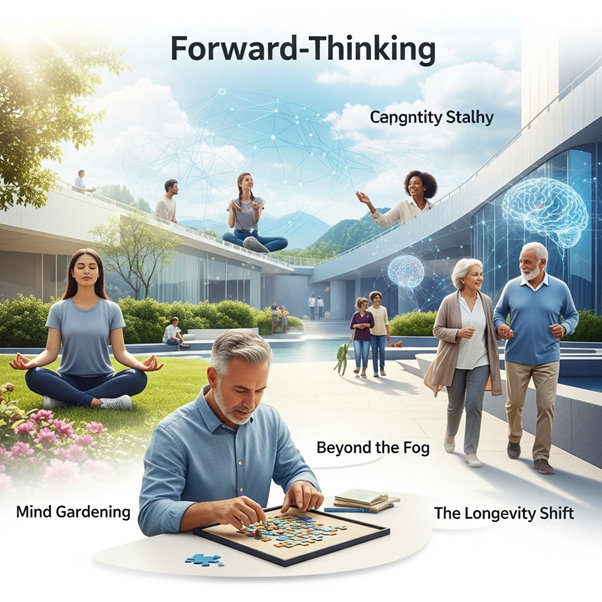
There are three main parts to this piece that talk about this paradigm shift: Beyond the Fog, The Longevity Shift, and Mind Gardening. All of these ideas support a planned, proactive approach to brain health, beginning now and going on for a long time.
Beyond the Fog: The Rise of Pre-Emptive Brain Care as a Modern Requirement for Daily Life
Memory loss, cognitive decline, and diseases like Alzheimer's were once considered normal aspects of ageing. People thought that these conditions would only happen in the far future, and they didn't do much until the signs became clear. But new discoveries in brain and learning are calling this view into question. People are beginning to understand that the brain is not a static organ; even in adulthood, its composition and functioning can undergo alterations.
The thought of preventative brain care has become a strong current need. Researchers in the field of neuroscience have found that the human brain can adjust, change, and grow all the time. This is called neuroplasticity. We don't have to sit around and wait for cognitive loss to happen; we can now take steps to protect and strengthen our brains' future. As brain care moves forward, it's not just about lowering risks; it's also about actively creating a brain that is strong and works well so that people can live a long and healthy life.
We now know that cognitive loss will happen, not "if" it will happen. The faster we can protect and improve brain function, the more likely it is that we won't have to deal with major problems later on. However, a lot of us still don't know what tools and methods we can use to keep our minds clear.
The Longevity Shift: Why the 30s Are the New "Frontline" for Keeping Your Mind Sharp
Most people think of getting Alzheimer's or another disease that comes with getting older when they think about brain health. But in fact, the fight for long-term brain health starts a lot earlier, in our 30s. At this age, the first changes in brain function and mental clarity can be seen, even if they are small. Cognitive loss is often a slow process that takes decades to fully show up. Neurodegenerative changes that lead to Alzheimer's and dementia don't happen quickly. They are caused by genetic, environmental, and social factors that build up over a person's lifetime.
This is one reason why your 30s might be the most important decade for brain health. This is the best time for you to start the daily habits and routines that will shape your brain for years to come. Studies have shown that building cognitive strength in your 30s can make it much less likely that you will get a cognitive problem later in life.
In real life, what does this "frontline" era look like?
Making choices about how to treat our brains is a big part of it. Are the things we're giving it healthy? Are we doing things with it that will keep its mind active? Are we good at dealing with stress, or are we letting worry wear us down? People in their 30s are at the peak of their cognitive abilities. They should also take more steps to avoid future cognitive issues.
Because of the longevity shift, we need to be proactive about our brain health, just like we are about our physical fitness: we need to keep up with it and pay attention to it during the important years when our bodies and minds are most flexible.
Mind Gardening: Keeping your mind strong by building up your cognitive reserves
Think of your mind as a garden. It's full of possibilities, but it needs daily care, attention, and discipline to grow. For this example, your mental stores are like dirt, and the habits you work on every day are like seeds that grow into strong people. Mind planting is the practice of growing a healthy, flexible, and future-proof brain on purpose by doing the same things over and over again with care.
The tools of this garden are daily habits like working out your mind, eating well, dealing with worry, and being active. The brain grows when it is stimulated, fed, and cared for, just like a yard grows when it gets sun, water, and proper care. Neuroscientific study backs up the idea that regular mental exercise, like solving problems, picking up new skills, and having difficult talks, makes neural networks stronger and builds up cognitive reserves that can be used when needed.
Neuroplasticity
When you learn new things, face new challenges, or experience stimulation, your brain undergoes changes known as neuroplasticity. You can make your brain better at adapting, learning, and remembering new things for the rest of your life by giving it new, difficult things to do all the time.
At the same time, you need to make sure your brain gets the food it needs. This means giving it food that is high in minerals, vitamins, omega-3 fatty acids, and chemicals that help the brain work well. Stress is another crucial factor to manage—over time, ongoing stress can lead to a decrease in brain function, so adding mindfulness practices, calm methods, and quality sleep becomes part of the "watering" process for your brain garden.
Finally, physical fitness plays a major part in mental health. Aerobic exercise, in particular, brings more blood to the brain and helps new neurones grow, especially in places that assist with learning and recall. This is why it's so important to do both physical and mental training together: it makes the brain stronger in its ability to grow, change, and fight decline.
Empowering the Future: Becoming the Architect of Your Brain
The Forward way of thinking about brain care is to make sure that your mental health is a priority from the start of your daily life. You can build a strong mind that will last for decades if you practice mind gardening every day, take care of your brain before it breaks down, and know that your 30s are the most important years for keeping it healthy.
Your brain isn't a set thing. It is a flexible and changing system that can be shaped and made stronger with deliberate effort. Neuroplasticity is the study of how the brain changes over time. If you have the right attitude and do certain things every day, you can change the way your brain changes over time.
You can build your own brain and make sure it stays sharp, clear, and strong for years to come by learning and using these three bases. Your brain is a tool that can help you grow and live, so take care of it.
Written by M R Gurmani
Senior Editor at AIUPDATE. Passionate about uncovering the stories that shape our world. Follow along for deep dives into technology, culture, and design.
View ProfileEnjoying this article?
Our independent journalism is made possible by readers like you. If you found this story valuable, please consider supporting us.

Discussion
Join the chatLog in to comment
Join the community discussion and share your thoughts.
Sign In / RegisterNo comments yet. Be the first to start the conversation!