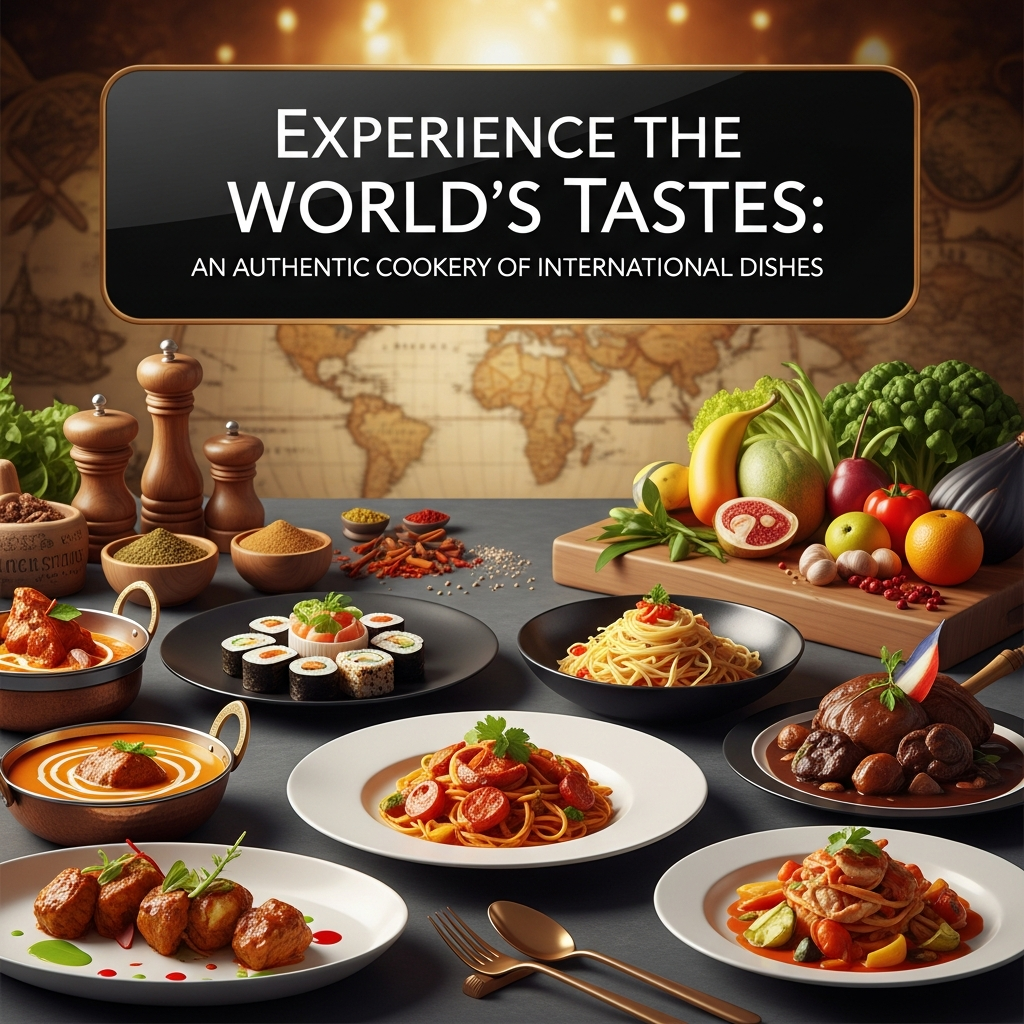
Experience the World's Tastes:
An Authentic Cookery of International Dishes
Introduction:
Food is not just fuel—it’s an experience that connects us to the world, giving us a taste of history, culture, and tradition with every bite. They aren't! And with international cuisine in particular, you have the chance to learn about a whole slew of different cultures right from your kitchen. Whether you’re already a pro in the kitchen or are just starting to learn how to cook, making recipes that come from different cultures can be fun and rewarding.

In this blog, we dive deep into foreign cuisines and provide you with recipes to impress your friends and family as well as culture-cuisine pairings that will surely bring new skills to your kitchen! Whether you’re dreaming of spicy Mexican food, fresh Italian pasta, or a perfectly delicate Japanese lunch, it’s time to replicate your favourite recipes in the comfort of your own home.
Why International Cuisines Matter:
The joy of world food is as much about the tastes as the stories. Each dish is a mirror to a culture’s history, geography and the people who have perfected it for generations. When you make international recipes, you’re not just cooking food — you’re exploring the world. For instance, the brash and hot flavours of Thai cooking echo the nation’s varying climates and history, while the hearty stews of French cooking illuminate that country’s agricultural roots and its mastery of deep layers.

In addition, exploring world cuisines makes it possible for you to step away from everyday dishes and experiment with new foods, techniques, and flavours. It’s an excellent way to challenge yourself and learn about food customs that have influenced how we cook now. Food is becoming ever more globalised, and international cuisine has never been easier to try, share and enjoy in each other’s homes around the world.
Exploring Authentic Recipes:
One of the most enjoyable and rewarding aspects of cooking food from around the world is finding and making authentic recipes. Each culture has a bounty of flavours waiting to be discovered, from flaky French pastry treats to meaty Mexican street eats.

Let’s begin with Mexican food, a cuisine that prioritises bright, loud flavours. We are talking about more than tacos, burritos and tamales here. You can even attempt authentic Mexican tacos al pastor, which combine delicious, marinated pork with pineapple and fresh cilantro in soft corn tortillas. These tacos are a classic street food in Mexico City, with lime juice and salsa.

If you crave something a little sweeter, then make sure to try French pastry. The rule of thumb for French bakeries is to serve perfectly flaky croissants and buttery tarts. Attempt to replicate the classic French quiche Lorraine, with a buttery, crisp crust piled high with a creamy blend of eggs, cheese, and bacon. The recipe may be a little daunting at first glance, but once you catch on, you’ll understand the nuanced combination of flavours and textures that make French pastry so craveable.

A third international favourite is Indian curry. The incredible spice life of India’s varied cooking is dependent on vibrant spices such as turmeric, cumin, and coriander. Whether in a humble chicken tikka masala or a robust vegetable curry, the secret to great Indian curries is layers of flavour and spices. Learning to perfect these combinations of seasoning, you can cook up some totally aromatic curries that are at once intense and alluring.

And for seafood lovers there is Japanese sushi, a light and delicate means of consuming fresh fish. Rolling your own sushi takes some practice, but armed with the right ingredients and techniques, you can make delicious restaurant-quality sushi in your home. Whether it’s a sushi roll with avocado and crab or a rhinoceros beetle-sized piece of nigiri with ethereal slices of tuna, each mouthful sends you straight to Japan’s enchanting culinary heritage.
Essential Cooking Techniques:
There are no shortcuts to savouring authentic international foods, so getting down and dirty with classic cooking techniques is imperative. These methods frequently separate the true meals of a recipe from fast-food derivatives, which may be blander.

Sushi Rolling (Japanese): To make sushi, you need delicate hands to cook the best rice and then roll the rice and filling up tightly in a bamboo mat. The secret to outstanding sushi is found in the rice—sticky, but not overly so, and appropriately seasoned with vinegar, sugar and salt.

Spice Balancing (Indian): So much of Indian cooking is about balancing spices. "Tadka", or the practice of blooming spices in hot oil at the start of a dish, helps coax essential oils and aroma out of spices. Once you get this step right, you will make nicely spiced curries.

Low Heat (French): Much of French cooking is done using low heat and slow cooking techniques to develop strong flavours. Plates, such as coq au vin and beef bourguignon, simmer over several hours so the flavours meld and develop depth.

Grilling (Mexican): Mexico has its own tradition of grilling, including grilling on a charcoal open flame that has been brought down through the centuries in Moorish Spain. Grilled or barbecued meat, such as carne asada and al pastor, includes traditional elements of Mexican grilling. Mastering the grill so your meat tastes perfectly charred not only brings out its flavour and texture, but it is also an important element in a lot of genuine Mexican cuisine.

Ingredients You Should Know:
Some recipes include ingredients that may sound unfamiliar, but they're crucial for getting close to the authentic flavour. These are the essential pantry items to keep on hand if you want to cook your way around the world:
Mexican food: Tamales, enchiladas, and mole sauce all rely greatly on either chipotle peppers, epazote, or masa harina (corn starch).
French Cuisine: French recipes often incorporate Herbes de Provence (dried herbs) and beurre noisette (brown butter) to enhance the depth of flavour.
Garam masala, asafoetida and tamarind paste are all regularly used in Indian cooking. These elements layer together to produce the rich, aromatic flavour that is a hallmark of Indian curries.
Japanese Food: Mirin (sweet rice wine), wasabi, and nori (seaweed) are all key ingredients in Japanese dishes, such as sushi, soups, and rice.

If you can’t find one or both of these things at your grocery store, not to worry. You can find real ingredients beyond your local supermarket and most ethnic groceries, but you may already have substitutes for many of them.
Cultural Significance:
Each one of these dishes is infused with the cultural beliefs, values, and cuisines that time has for generations. They have stories in which intersectionalism exists among tradition, geography and family. Take Italian pasta, for example. Pasta isn’t just a dish; it’s a symbol of Italian family life, made in the kitchen, often from scratch, and passed down through the generations. It’s not just food; it’s a celebration of togetherness and love.

Many traditional Mexican dishes, such as tamales, are prepared for holidays and celebrations. Tamales are a Mexican tradition, a recipe that’s been handed down for generations and a symbol of family and community.

In Japanese culture, sushi is an art rooted in hundreds of years of tradition and ceremony. The aesthetics and tradition of sushi presentation are consistent with the Japanese cultural value of simple elegance and focus on minimalism.

And by cooking these international dishes at home, you aren’t just recreating a meal—you are participating in a global tradition, communing with the cultures that produced them.
Conclusion:

By: Janet Kusterer The way to a multicultural world is through the kitchen Not Just for Vegetarians is about cooking natural global cuisines Bringing new recipes from around the world makes it possible to grope behind that elephant's curtain of ignorance and discover more of what makes this world so immensely diverse.

Because whether you're learning the art of rolling sushi, mastering a flaky French pastry or whipping up a spicy Indian curry, these recipes and techniques establish a world of culinary opportunities. So grab your ingredients, roll up your sleeves and go on a taste journey. As you play with these recipes, you'll learn to appreciate diverse cultures and expand your culinary repertoire. Be inspired by the flavours of the world and make any meal an adventure. And when you cook a dish that transports your taste buds, every bite tells a story!
Written by M Rousol
Senior Editor at AIUPDATE. Passionate about uncovering the stories that shape our world. Follow along for deep dives into technology, culture, and design.
View ProfileEnjoying this article?
Our independent journalism is made possible by readers like you. If you found this story valuable, please consider supporting us.

Discussion
Join the chatLog in to comment
Join the community discussion and share your thoughts.
Sign In / RegisterNo comments yet. Be the first to start the conversation!