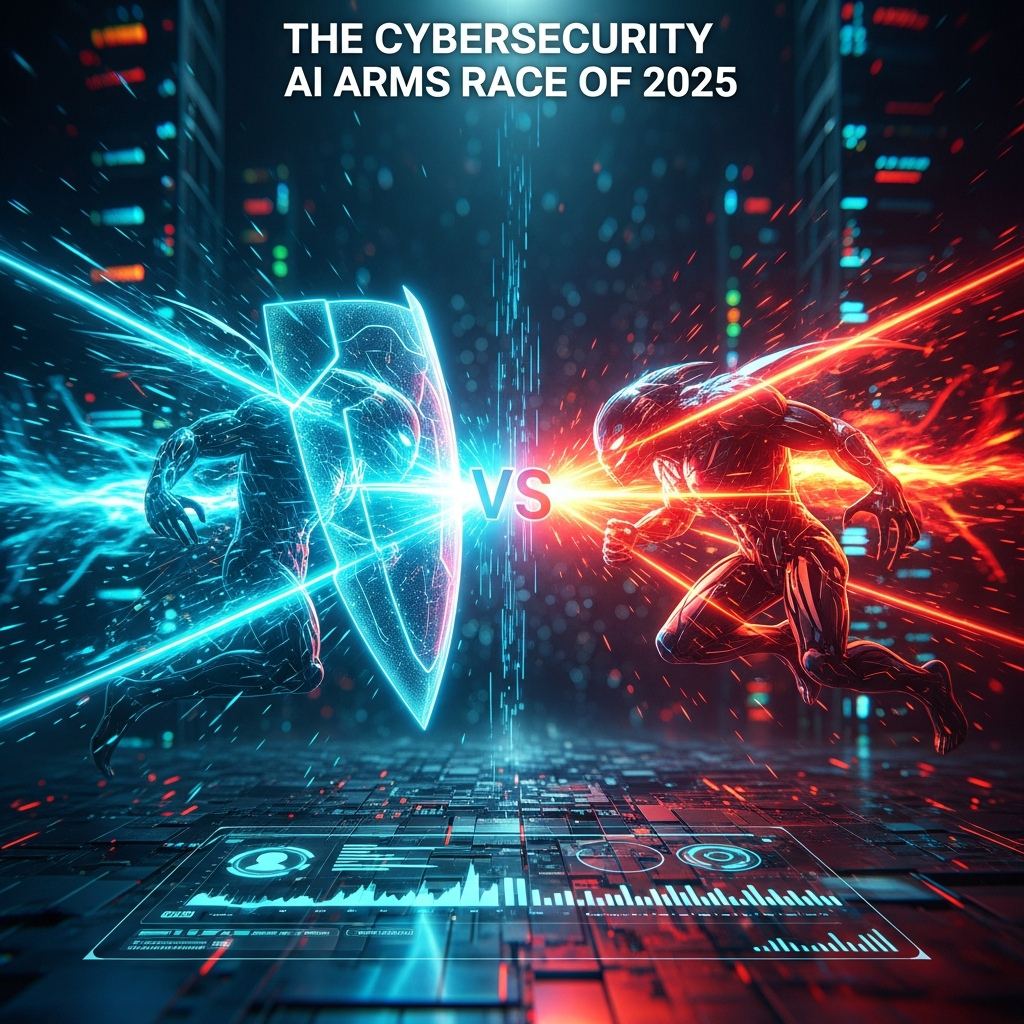
The Cybersecurity AI Arms Race of 2025
As we get further into the digital age, 2025 has made one thing obvious: AI is no longer just a tool; it is the main stage for the modern cybersecurity arms race. AI is now a big part of both offence and defence in financial networks all over the world. This trend is changing how scams are made and how defences work in real time.
The Rise of AI-Driven Scams
Cybercriminals are quickly using AI to make their attacks bigger and harder to stop. Attackers now use generative models to create fraud campaigns that are very personalised and can change on the fly instead of just using simple malware or social engineering.
1. Deepfakes and pretending to be someone else
AI-generated audio and video are being used to convincingly impersonate CEOs, financial executives, and even family members. This makes it easier for wire fraud and extortion to happen. It's harder for people and businesses to tell the difference between real and fake right away when these deepfakes are used in real time during calls or multimedia messages.
2. Phishing and social engineering that happens on its own
Phishing campaigns, which used to be just sending out a lot of emails, are now more targeted. Scammers today use AI to look at personal and professional information that is available to the public and write messages that sound, look, and fit the victim's situation. Researchers believe that by 2025, more than 80% of phishing emails will use AI language models.
3. Scams that involve chatbots engaging in conversations with people are becoming increasingly common.
More and more attacks are using AI chatbots that can have realistic, adaptive conversations with their victims. They can ask questions, make people less suspicious, and get private information right away. These systems usually work on a big scale, going after thousands of potential victims at once.
4. Platforms for creating fake identities and committing fraud on a large scale
Underground markets have seen the rise of independent AI agents like "FraudGPT" and tools that offer phishing as a service. These tools help criminals who aren't proficient with technology run complicated campaigns.
What these changes mean for financial networks: AI-based fraud and scams are two of the biggest threats to banks all over the world. They cost billions of dollars and make people less likely to trust online channels.
AI as Defender: Keeping an eye on things and responding to them in real time
As AI-powered threats become more common, defenders are using AI tools that are just as advanced to protect users and financial systems.
1. Monitoring threats on its own
AI-based systems that security teams use can look at a lot of network traffic and user behaviour in real time and find strange patterns that could mean fraud or an intrusion long before people can. These systems can often figure things out on their own by learning how things normally work and letting you know when something goes wrong.
CIO
2. Looking for and checking deepfakes
AI is also the best way to protect yourself from it. Specialist models are being taught how to spot small differences in fake audio and video, as well as fake images used in identity theft. Deepfake detectors and other tools check the truthfulness of biometric and contextual signals by comparing them to one another.
3. Federated Real-Time Scam Detection
Recent studies show how federated AI frameworks can work together at different schools to observe scams as they happen, without breaking user privacy. These systems collaborate to update their information, allowing banks and platforms to share details about threats without consolidating all sensitive data in a single location.
4. Using AI to train and simulate risk
Banks and other financial institutions are using AI more and more to simulate attacks, test their defences, and teach employees how to spot sophisticated scams. By mimicking how threats change over time, these simulations make both human and machine defences stronger.
A Battlefield That Is Constantly Changing
AI is coming together on both sides, which makes it a hostile environment where attackers and defenders are always coming up with new ideas and ways to deal with them. This has many important effects:
Speed is important because AI can plan and carry out attacks in seconds. Defences need to be able to find and stop them just as quickly.
Scale and Autonomy: Autonomous attack and defence agents work on their own, which means that threats and responses can happen much faster than they do in traditional cybersecurity workflows.
Shared Risk Ecosystems: All financial networks are linked, so an attack on one institution can spread to payment and trading systems all over the world. Defenders often share information through federated systems to lower systemic risk.
The level of readiness in an organisation can be very different. Companies are spending more money on AI defences, but many have trouble using these technologies to their full potential because they don't have the right skills or strategies.
The End of the AI Arms Race in 2025
In 2025, artificial intelligence makes threats worse and protects against them in the world of cybersecurity. Scammers use AI to make phishing, deepfakes, and conversational scams look even more real. Defenders use AI to watch for these threats, find them, and stop them in real time.
This race to build better AI isn't just about the technology; it's also about money and strategy. It's changing how banks keep their systems, customers, and trust safe in a time when enemies are getting smarter all the time.
These issues will only get worse as AI gets better. In the next ten years, it will be very important for global cybersecurity to teach people how to use AI responsibly and work together to stop attacks.
Written by M Rousol
Senior Editor at AIUPDATE. Passionate about uncovering the stories that shape our world. Follow along for deep dives into technology, culture, and design.
View ProfileEnjoying this article?
Our independent journalism is made possible by readers like you. If you found this story valuable, please consider supporting us.


Discussion
Join the chatLog in to comment
Join the community discussion and share your thoughts.
Sign In / RegisterNo comments yet. Be the first to start the conversation!