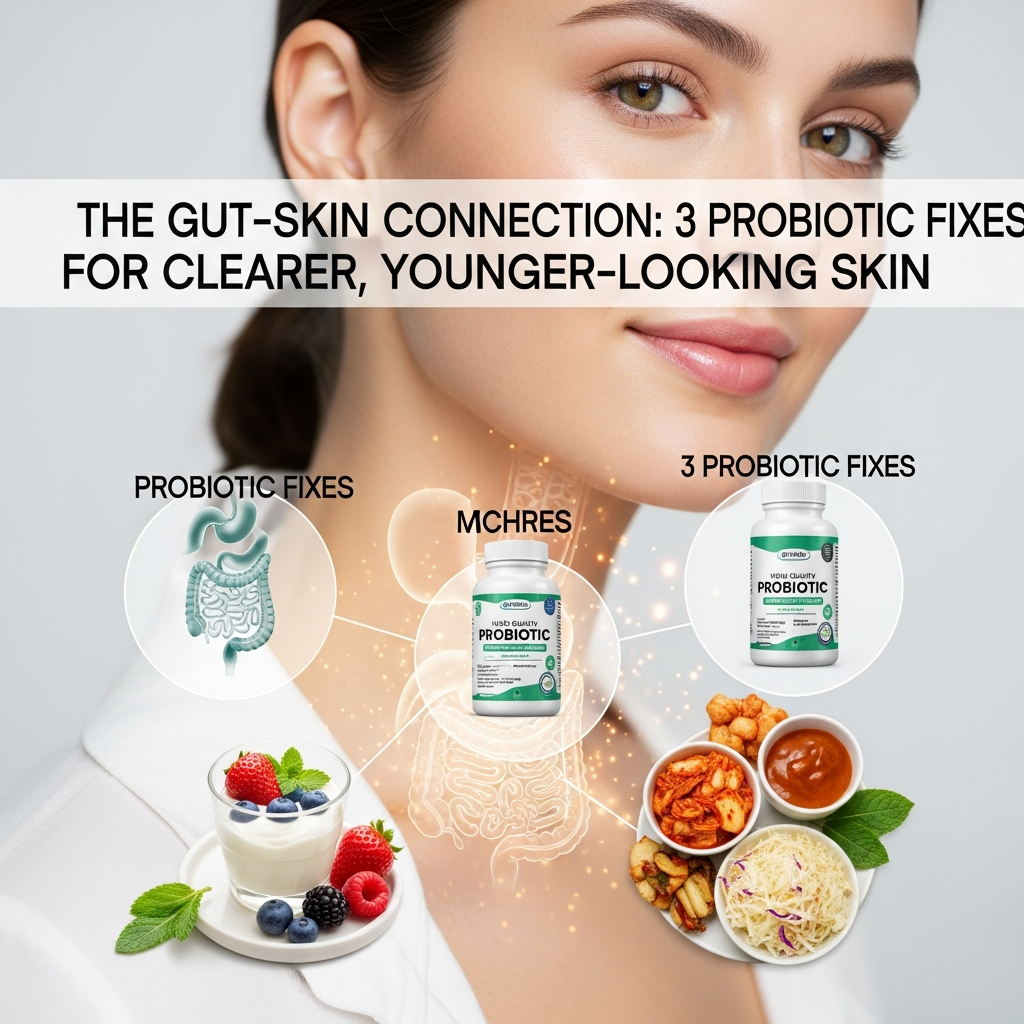
The Gut–Skin Connection: 3 Probiotic Fixes for Clearer, Younger-Looking Skin
When we think about skincare, we usually picture serums, creams, and treatments applied directly to the face. But a growing body of research suggests that some of the most powerful influences on skin health lie much deeper—inside the gut. From acne and redness to premature ageing and sensitivity, many common skin concerns are closely linked to what’s happening in the digestive system. 
This relationship is known as the gut–skin connection, or the gut–skin axis, and it’s changing how experts think about beauty and anti-ageing.
Rather than being a vague wellness trend, probiotics are emerging as a targeted, science-backed way to support clearer, healthier, and more resilient skin—starting from within.
Understanding the Gut–Skin Connection
The gut is home to trillions of microorganisms—bacteria, fungi, and other microbes—collectively known as the gut microbiome. These microbes play a critical role in digestion, immune regulation, inflammation control, and nutrient absorption. The skin, meanwhile, is the body’s largest immune organ and a key barrier against the outside world.

The gut and skin communicate constantly through immune signals, hormones, and inflammatory pathways. When the gut microbiome is balanced, it helps regulate inflammation and supports a strong skin barrier. When it’s disrupted—a state known as **dysbiosis**—inflammatory compounds can circulate through the bloodstream, triggering or worsening skin problems.
In simple terms: an inflamed gut often shows up as inflamed skin.
Skin Issues Commonly Linked to Poor Gut Health
An imbalanced gut microbiome has been associated with a wide range of skin concerns, including:

Acne and breakouts: Linked to inflammation, insulin resistance, and altered gut bacteria
Eczema and dermatitis: Often connected to immune dysregulation and increased gut permeability
Rosacea: Strongly associated with gut conditions such as small intestinal bacterial overgrowth (SIBO)
Premature aging: Chronic inflammation accelerates collagen breakdown and oxidative stress
Dullness and uneven tone: Poor nutrient absorption affects skin renewal and glow
Heightened sensitivity: A weakened gut barrier can contribute to a compromised skin barrier
While topical skincare can help manage symptoms, addressing the gut may help tackle root causes.

What Are Probiotics—and Why Do Strains Matter?
Probiotics are live microorganisms that, when consumed in adequate amounts, confer health benefits to the host. Not all probiotics are the same. Different strains have different effects, and this is especially important when it comes to skin.

Some strains help regulate inflammation, others strengthen the gut lining, and some influence hormone metabolism or immune balance—all of which can impact skin health. That’s why probiotics work best when they’re targeted, not generic.
Probiotic Fix -1: For Acne and Breakouts
Focus: Inflammation control and hormone balance
Certain probiotic strains help reduce systemic inflammation and improve insulin sensitivity—two major drivers of acne.

Key strains to look for:
· Lactobacillus rhamnosus
· Lactobacillus reuteri
· Bifidobacterium lactis*

NOTE: Research suggests these strains can help lower inflammatory markers and may reduce acne severity when taken consistently. They also support gut barrier integrity, limiting the inflammatory cascade that can trigger breakouts.
Best sources:
· Supplements with clearly labelled strains
· Yoghurt and kefir (for general support, though strain specificity may vary)
Probiotic Fix -2: For Redness, Sensitivity, and Inflammatory Skin Conditions
Focus: Immune modulation and gut barrier repair.

WARNINGS: Skin conditions like eczema, rosacea, and chronic redness are often linked to immune overactivity and gut permeability (“leaky gut”). Probiotics that calm immune responses can be especially helpful here.
Key strains to look for:
· Lactobacillus paracasei
· Lactobacillus plantarum
· Bifidobacterium longum

NOTE: These strains have been shown to support the skin barrier, reduce sensitivity, and improve tolerance to environmental stressors.
Best sources:
· Fermented foods like sauerkraut, kimchi, and miso
· Targeted supplements designed for immune or skin support
Probiotic Fix-3: For Anti-Aging and Skin Resilience
Focus: Collagen preservation and oxidative stress reduction
Ageing skin is influenced not just by sun exposure and genetics but also by chronic low-grade inflammation and poor nutrient absorption. A healthy gut helps absorb key skin nutrients like vitamin C, zinc, and amino acids essential for collagen production.

Key strains to look for:
· Lactobacillus acidophilus
· Bifidobacterium breve
These probiotics may help reduce oxidative stress and support metabolic pathways linked to skin repair and elasticity.
Best sources:
· Multi-strain probiotic supplements
· Fermented dairy or plant-based alternatives

Digestion, Nutrients, and Collagen: The Inside-Out Path to Better Skin
Even the best diet won’t benefit your skin if nutrients aren’t absorbed properly. Gut health directly affects how well the body utilises proteins, healthy fats, antioxidants, and minerals needed for:

· Collagen and elastin production
· Skin cell turnover
· Wound healing and repair
Protection against environmental damage
When digestion improves and systemic inflammation decreases, the skin often becomes clearer, firmer, and more luminous over time.

Food vs. Supplements: Which Is Better?
Both probiotic-rich foods and supplements have benefits:

Probiotic foods
· Support overall gut diversity
· Provide additional nutrients
· Best for maintenance and general health
Probiotic supplements
· Offer precise, research-backed strains
· Deliver consistent doses
· More effective for targeted skin concerns
visible skin benefits.
For visible skin benefits, many experts recommend combining both—using food as a foundation and supplements for specific goals.
How Long Does It Take to See Skin Improvements?
Gut-based skin changes don’t happen overnight. Realistic timelines include:
· 2–4 weeks: Improved digestion, reduced bloating
· 4–8 weeks: Reduced inflammation, calmer skin
· 8–12 weeks: Noticeable improvements in acne, redness, or overall glow

Consistency is key. Skin reflects long-term internal balance, not quick fixes.
What Experts Agree On: Skin Health
Dermatologists and gut-health researchers increasingly agree on one point: **skin health is inseparable from overall health.** While probiotics aren’t a cure-all, evidence supports their role as part of a comprehensive approach to managing inflammatory and ageing-related skin concerns—especially when combined with proper skincare and lifestyle habits.

Lifestyle Habits That Support the Gut–Skin Axis

To get the most from probiotics:
· Eat a fiber-rich diet (prebiotics feed good bacteria)
· Manage stress (chronic stress alters gut bacteria)
· Prioritize sleep (the microbiome follows circadian rhythms)
· Limit ultra-processed foods and excess sugar
The Takeaway: Beauty Starts in the Gut
Skincare doesn’t stop at the surface. Clearer, younger-looking skin is often a reflection of what’s happening inside the body—particularly in the gut. By supporting the microbiome with targeted probiotics, nourishing foods, and healthy habits, you’re not just treating symptoms; you’re strengthening the foundation of skin health.

So the next time you invest in your beauty routine, ask yourself: does it support your gut as much as it supports your skin?
Written by M Rousol
Senior Editor at AIUPDATE. Passionate about uncovering the stories that shape our world. Follow along for deep dives into technology, culture, and design.
View ProfileEnjoying this article?
Our independent journalism is made possible by readers like you. If you found this story valuable, please consider supporting us.


Discussion
Join the chatLog in to comment
Join the community discussion and share your thoughts.
Sign In / RegisterNo comments yet. Be the first to start the conversation!