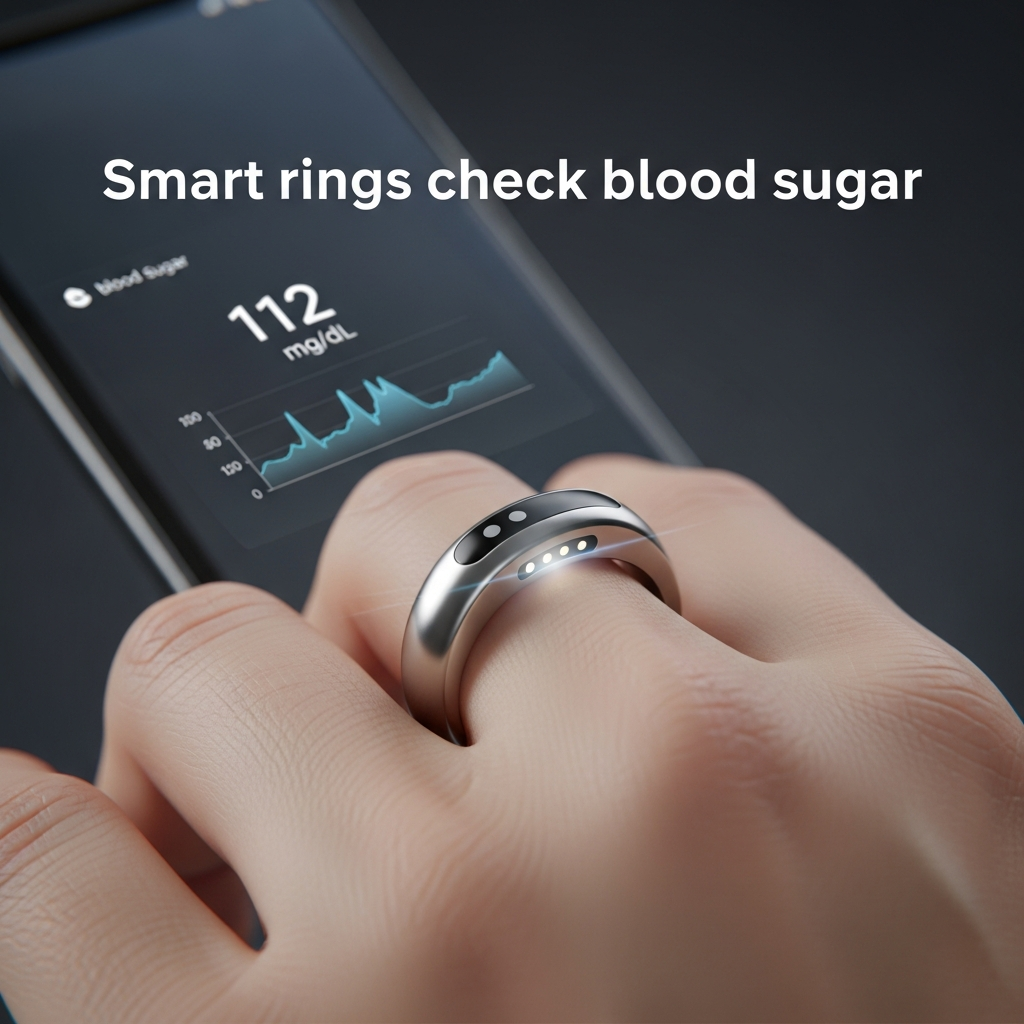
Smart rings check blood sugar.
Discreet smart rings and tools that don’t interfere become the new way to monitor the state of our health so we can do something with it.

Therefore, wearable technology is currently the leading trend in health and fitness. A super important new device is the Continuous Glucose Monitor (CGM), a smart ring. Diabetes patients were the initial target audience for these devices. These devices are now beneficial for healthy individuals seeking increased energy and improved performance in sports.

Not too long ago, the type of tech you could wear was limited to fitness trackers and heart rate monitors, but that’s not true with today’s gadget climate. With smart rings and CGMs, you can already get more sophisticated health information in real time. These are handy numbers to let people get an idea of how their bodies work. Check out how these new gadgets are revolutionising the way we monitor and maintain our health.
What, then, are the smart rings and monitors that don’t diminish?

Small wearable devices called smart rings can keep tabs on your health in a subtle way. These are supposed to monitor important things, like your heart rate, body temperature, and how much you sleep and move. As a small device, smart rings won’t take up too much space. It’s something you can wear all day and then in the evening. This, in case you didn’t know, is why they are great to keep all the time.

And the Continuous Glucose Monitor (CGM) is another smart piece of technology which isn’t going to bite. CGMs, in their earliest forms, were created to assist people with diabetes. Today, sensors applied to the skin continuously monitor blood sugar levels. These tools display how blood sugar levels change during the day, in real time, for people with diabetes. Increasingly, people without diabetes are wearing CGMs to learn how their bodies respond to stress, food and exercise. This helps individuals maintain their strength and achieve their fullest potential.

This article explores how CGMs and smart rings can help individuals without diabetes maintain their health.
CGMs were created primarily to aid people with diabetes in controlling their blood sugar levels. But there are plenty of other uses for them, too. Could you please let us know who is currently utilising these tools?
Maximising your natural abilities to their fullest extent

Those who monitor their blood sugar levels every day can compare what they ate to how they feel. But, if people track them in the moment, they can often discern patterns in their blood sugar levels that enable them to change how they eat and live. For example, you are feeling that some things raise your blood sugar and leave you tired for the rest of the day. You can make intelligent decisions that keep your blood sugar steady, give you energy and prevent you from falling asleep in the middle of the afternoon after reading this.
Better sleep
Smart rings and CGMs also track how well you sleep. You and everyone else are better served if you actually get enough sleep.

If well-being is your goal, you may need to look closely at the way you sleep. Most smart rings will tell you how well you’re sleeping and monitor the various stages of sleep, like light, deep and REM. Some models even track things like how fast or slow your heart beats to give you a more comprehensive idea of how well you sleep.
Logging your workouts and your wins

A smart ring monitors your activity level when you wear it. It monitors your steps, the pounds you’ve burnt and general movement. And some of the newer ones can even check your heart rate and body temperature to give you an idea of how healthy you are. They can benefit anyone who is looking to get in shape, be they a professional athlete or simply someone who wants to remain healthy and active.
Through continuous glucose monitors, people can learn more about their health as they see how various items — food, exercise or rest, for example — influence sleep quality and overall performance. This way, you can optimise your workouts, rest and food.

How to handle stress
That’s where wearable tech like smart rings and CGMs comes in — two examples of wearables specialists can use to monitor your stress. A lot of devices now include screens that allow you to monitor changes in HRV, one of the most important signs of stress and, if possible, recovery.

An HRV watcher can, in a way, see how well his or her body is navigating stress. If they know that, say, they’re not dealing with stress effectively, and if there’s some way to change their schedule so that it includes more yoga or meditation or something else restful, then they can adjust accordingly.”
Health tips made for you
The power of these gadgets may come as much from their ability to offer you specific health information. Smart rings and CGMs monitor their users around the clock, allowing them to figure out patterns of their own bodies as well as collect data that is personal to everyone who dons them. And this personalised information will guide people to make better health choices than generic health tips. This way they will be able to work out when it is best to eat, work out and manage stress, for example.

Health tech that you can wear can also be useful for people without diabetes.
Exploring the Workings of the Body

And people without diabetes can also use smart rings and CGMs to learn more about how their bodies react to things like food, stress, exercise and sleep. This technique can enable people to make better decisions, be happier and live healthier lives.
Looking after your health in advance
Users can track their health with long-term data. Wearables allow people to see their health in real time so they can do something before it’s too late. You can change how you eat, exercise or manage your stress early by watching what’s happening with your blood sugar levels, sleep patterns and stress level.

Find a hundred more reasons to be inspired
A lot of people believe that being able to see this data in real time keeps them more active, helps them eat healthier, and makes them more mindful of their mental health. Wearable health monitors are always there to keep you on track and motivated so that you can be a healthier person.

Privacy and ease of use
Wearables are separate from blood tests or time spent in a logbook because they watch you all the time. They are not visible, and they don’t hurt, so people can wear them all day every day without interruption in their daily life.
What will the future of health tech, which you wear, look like?

Smart rings, CGMs, or other non-invasive tools (as portable tech improves) would be very useful. Sensors could become even more accurate over time. They might also play more nicely with other types of health technology, such as AI and machine learning, and they could come with a suite of features that make them easy to use for immediate benefit to health.

Smart rings and CGMs are going to give us insights into what our bodies need and will continue to make them healthier in the future. Thanks to data, more and more people want to take care of their health, period.
We need a new way to be healthy.

Smart rings and CGMs are some examples of wearable tech that’s revolutionising the way we monitor ourselves to get better. What these tools can do is provide their owners with a stream of specific, real-time data that helps them figure out more about why they’re stressed, how much energy they have and how well they’re sleeping. Each of those things can help people live a longer, better life. These new wearables will help you or someone who cares about health learn more and get inspired to do better.
Written by M Rousol
Senior Editor at AIUPDATE. Passionate about uncovering the stories that shape our world. Follow along for deep dives into technology, culture, and design.
View ProfileEnjoying this article?
Our independent journalism is made possible by readers like you. If you found this story valuable, please consider supporting us.


Discussion
Join the chatLog in to comment
Join the community discussion and share your thoughts.
Sign In / RegisterNo comments yet. Be the first to start the conversation!